Guess what happened at work? Or the things that YL teachers live for.

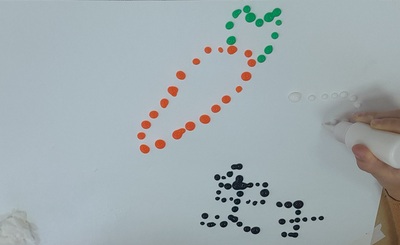
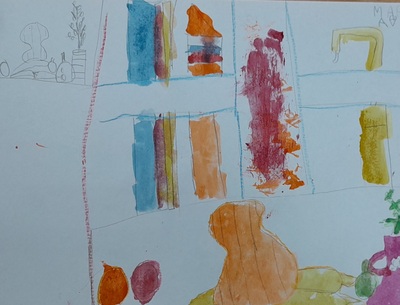
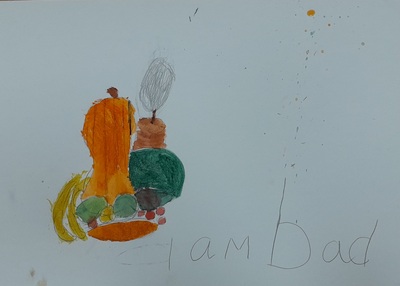
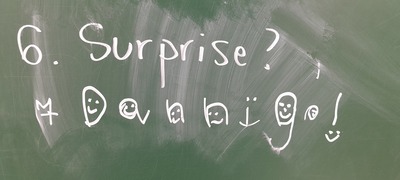
A suggestion from a student that we should add a ‘Danny Go!’ song to our lesson, written by my student, in his first year of learning English.

Time to admit it, we are a strange breed!

First of all, our work stories are not really glamorous. There are no celebrities in them, no events that make the news, no interesting places and no brand names. Speaking from experience here, in comparison with the copywriters, marketing experts, nurses and doctors, engineers and accountants in my life who also come back home and share theirs. What teachers bring from school are the tales of behaviour issues, funny quotes, developmental stories, getting things right and getting things wrong.

And then even as teachers…a while ago, I met a friend whom I hadn’t seen for a while and we were catching up on life and work and all things related. I shared my adventures and my recent and relatively short-lived (thank heavens) period of revisiting adult EFL. My friend was at the same time in awe and taken aback. ‘In awe’ happened because this year added a nice few pretty-looking lines to my resume as the weight that would come with the names of international banks and IT companies or with the noble and serious sectors of the high levels, Business or Financial English. ‘Taken aback’ came about as a result of my attitude, a tired ‘Yeah, whatever’ that turned into bored or openly dismissive as the conversation went on. Apparently, I should have been very excited and proud.

It is not that I did not enjoy these lessons or that I did not do a good job or that I was not grateful for the enthusiasm with which my students came to class. I did and very much so (you can read it about here) but that was nothing special, just the everyday.

Take baking, for example. If you bake and if you have been baking for some time, a batch of cookies or a batch of brownie is not a holiday, it is a must. It doesn’t mean that you will eat delicious cookies every single time, things go wrong, of course, but more often than not, if you take out your flour, soda, sugar and chocolate out, you can expect that at the end of the road, there will be good cookies. You have this experience, nothing to celebrate and nothing to write home about.

Same with teaching. After all these years, putting together a good lesson for an exam class or for a C1 group is kind of a must, not a special event. And yes, the respectable clients add a layer of fine veneer to the whole experience or, if we are to go on with the baking metaphor, a layer of icing but that’s it. And, really, students are just students and everyone deserves a good lesson, a top-notch businessman, an bank CEO or a five-year old boy.

That is why there is no special pride or excitement. It is a job well done. Still, it is only a job.

Teaching kids is not only a job.

It is also a job but it is not only that. It cannot be only a job when you are not only teaching your subject, whatever it is, but you are also taking part in bringing up the little human and helping them to understand the world, to learn how to function in it and how to interact with the rest of it that is not you. It cannot be ‘only a job’ when you are surrounded by the stories of these lives, the joys and the dramas and when whatever you are planning to do in class might be affected by everything that happened out of the lesson time and that simply because the little people cannot yet disassociate. It is not only a job when you get to sing and jump to the songs or to get your own hands dirty practising for the art classes.

The things that make me gasp, the things that make me get excited.

  • My kids doing a pair-work activity: it can be a very simple activity, just a ‘guess my flashcard’ game that involves nothing but reciting all the words from the set, until you get the right now. All the exciting elements, like asking a full question, taking notes of the answers or repeating the activity with a new partner, they come later. But to see them work on their own, keeping the conversation going and moving from point A to point B of the activity, this is precious. Introducing it is a process, it does not just happen, it does not happen overnight and introducing it takes time, a few lessons, weeks or months, depending on the child’s age. But it is possible and it is beautiful. When it finally happens, it is yours and can be used forever and ever. Here you can find a post about my experiment and a controlled and conscious way of introducing pairwork with my pre-school group. A successful one, too!
  • My kids creating their own songs and producing the language because of a song: I realised (and not such a long time ago) that I introduce some songs only because they contain a pretty chunk of the language, hoping that soon (or even sooner), these structures will become a part of what we can say. A good example here can be ‘What’s your favourite colour?’ by Super Simple Song. It is my favourite colour song, not because it is the easiest (that would be just ‘I can sing a rainbow‘, because that is, mostly, just a list of the words, ideal for a beginner group) but because it includes a very good question ‘What’s your favourite?’ and a very good answer ‘I like’ which, when mastered, can be used with any topic. I love singing and my kids love singing (not everyone loves the same songs, of course) and I say that right now, six months into the course, singing and creating our songs based on what we have sung already is one of our favourite activities. Right now, we have a habit of creating a song for the month and many version of it and we also love creating our own versions of all the other songs we sing. Here you can find a post from four years ago about un-singing the song. We still do it!
  • My kids beginning to do their task truly independently: What I mean by that is the shift and the huge stepping stone from doing a task, in the coursebook, workbook or any handout, step by step, led by the teacher, not copying the teacher’s answers but taking the exercise or the task in small bites, moving on together as a group of individuals, waiting for everyone to a situation when the teacher sets the task and everyone does it at their own pace and in their own way, choosing for example parts of the exercise that they deal with. It is always a big day for me and it is a sign that kids are becoming more independent learners. The expert is right next to them but they don’t need the support that much. Why? Because their zone of proximal development has expanded a little bit! Hooray!
  • My kids making decisions: I cannot tell you how many times, in this academic year, I have used the phrase: ‘It is your decision’ in response to anything that my students did, said or asked, as regards their English, Maths or Art lessons or any actions in class or during the breaks. I actually started to wonder if they know the phrase or if they can produce it as I always use English and Russian when we talk about it…It is necessary to include opportunities to make decisions but it is also necessary to develop the awareness of the fact that some things belong in the category ‘we do it, I cannot opt out’, such as tests. It is an interesting process and I am getting a lot of joy out of it. And pride.
  • My kids improving their literacy skills: The literacy skills and their development are probably the greatest challenge of the first year of English in primary but at the same time, they are the source of the greatest joy, passion, hype, reward and happiness. Firstly, because it is a long-term process and you can enjoy bits and pieces of it throughout the entire year, every single lesson and in many different variations: blending and segmenting, writing your own name in English, checking out our alphabet poster for reference, shared reading, looking at the materials and reading things themselves, just before they saw them, not because we were actually doing it, applying the phonemic awareness that they already have, choosing to write anything in English, especially when not induced by the lesson and the teacher and so on and so forth…Or, because they are able to, they proceed with the task independently (see point 3).

The life outside of the classroom

You can easily imagine that all these stories would not be enjoyed as much by anyone who is not a teacher. I am visualising me coming back home, meeting friends or getting in touch with my brother and sharing the story from this week:

Guess what happened today in class? Sasha wanted us to sing ‘Danny Go!’ in class and he asked to add it to the lesson plan. And he wrote it himself, almost 100% correctly! Look at the photo! (see: above). He only started to learn English with us in September! And now he writes all two words and I only help him letters, he writes them from memory!’

I think it is fair to say that the response would be, most likely, a polite smile or a nod, or, if the people are used to these kind of stories, maybe even a funny meme. Only a fellow YL teacher would appreciate it more. Or the readers on the blog, perhaps. It is all good. These are the stories that I bring from work.

What about you? What are the things that make you happy in the classroom? Please share in the comments!

Crumbs #77 Steve and Maggie, from a video to a game!

Ingredients

  • a series of lessons on professions for the primary school kids
  • a video from the Steve and Maggie channel
  • a set of cards or flashcards with different jobs

Procedures

  • Before we got to watch the video and to play the game, we went through a series of 4 lessons that were devoted to professions. During these lessons we inlcuded activities such as: introducing the vocabulary, matching the jobs with different accessories, miming the jobs, separate words and sentences in Present Continuous (‘A teacher is jumping in the toilet’), categorising the jobs and interviewing each other (‘Do you want to be a teacher?’), talking about what we want to be and don’t want to be, introducing a song, and even starting a project about one Alfonso Pomodoro (more on that later).
  • In order to make sure that we have some variety of resources and approaches, I also introduced a video from Steve and Maggie. I used it before because it is a nice story that includes a few jobs and some ideas why they are good or bad or easy or difficult and it can serve as a background for a whole range of activities.
  • This time round (and for the first time, too), I decided to use the video as a framework for a role-play. I wrote the mini-script on the board with ‘a Steve’ (‘I don’t want to be a teacher’, ‘Look, I am a doctor. I can…’ ‘I don’t want to be a doctor!’) and ‘a Maggie’ (‘OK. Abracadabra!’ and ‘5 minutes later’) and we read it together.
  • It was the first time we did any sort of a role-play with my students in year 1 and that is why I decided to do it as a whole class, with two students being involved at a time. I had only 5 students on the day and that is why it was possible. I modelled the game first and then the students were joining the pair of actors. Kids took out cards from the pile, at random, and acted based on that.
  • Each round involved two students and they had a go at three jobs with ‘Steve’ getting bored with all three jobs and deciding what he (or she) wants to be in the end. I have a mixed ability group but the stronger students could actually come up with some things that a profession can do as well as with a problem that would put them off. Some kids focused only on choosing the jobs and limiting themselves to ‘I don’t want to be a doctor. It is difficult!’

Why we like it

  • The game worked well. Even in its minimal version, it gave us an opportunity to practise the key phrases, ‘I want to be a teacher’ and ‘I don’t want to be a teacher’ as well as the jobs, both in speaking and reading.
  • The video created a great, easy-to-follow framework for our game and it was not necessary to create the context, the story did it for us.
  • It worked well in a mixed ability group because we could extend and minimise the amount of language
  • It was done as a whole class activity, with only two kids involved at a time but I am hoping that in the future we will be able to repeat it, in pairs or small teams.
  • It gave the kids an opportunity to be creative, not only while talking about why certains jobs and good or complicated but in choosing what they want to be in the end (‘I want to be a blogger’ or ‘I want to be a girl’ or ‘I want to be a student!’). One of my students also decided to use the card three times in three different rounds becuase ‘I want to be a judge!’.
  • We had fun and the element of surprise kept the kids in the audience interested. We laughed a lot!

Setting up the routine. Six months into the course

It has already happened! A few days ago, in the middle of a lesson, I suddenly realised that we are closer to the end of the game called the academic year and that one is now allowed to rejoice (‘Hurray! Almost there!’) and to panic a tiny little bit (‘Oh, my, do we even have enough time to finish everything?’), too.

The month of February has finished and it is the time to reflect on everything that is going on in the classroom. Please don’t forget to check the previous episodes in the series here.

Starting the lesson

This is the part of the lesson that is always the same: we say hello, we talk about how we are and we introduce the new students aka all the new toys that the kids have brought to school that day. The toys are usually well-behaved and they also want to share how they feel (= more production). After the longer weekends or the term-break we have also added another extension to share what we did. For that we use a few of the past verb forms that we know (I went, I ate, I saw, I liked, I didn’t) and we share our ideas.

The interesting thing is that on some days the kids also asked to repeat this stage of the lesson after the lunch break and it happened twice on rather difficult and emotional days. Somehow, everyone wanted to share how miserable and sad and tired they were. We did and I would like to think that calling out those emotions and validating them helped everyone a tiny little bit.

Songs

We still continue to sing As quiet as a mouse and What do you like to do? but our favourite thing about them is not the songs themselves but our variations and ideas. I absolutely love that they take so much pleasure in being creative and some verses are simply precious (‘I am as hungry as a dragon. Miss Anka, you’d better run away’) and even my not-so-strong and not-so-brave students take part.

I wanted to have a replacement for the January song but because I simply did not find anything interesting and fitting, we just wrote out own songs, with both my groups. We used the melody of Frere Jacques and with the help of the kids, we put the four verses together (‘February (x2). Make snowmen (x2). Spring is coming soon (x2) And holidays! (x2)’) and it quickly turned out that we have more ideas than we could fit in one verse so after singing the first part, we started to come up with more and more. This was easy, especially that the song follows the pattern of call and answer so it was very easy for the kids to lead it, too. We have even recorded a video for the parents.

Oh, I almost forgot, there is also Mr Jack Hartman who helps us practice multiplication tables (and here you can find a recent post on the songs that I use to get the kids to move)

Rules and classroom language

No major changes here and, guess what, walking around the room, is still the biggest vice and challenge and, surprise, surprise, we are still working on getting our 10th star. Two months in and we are still trying.

Story

February was a great month for storytelling. First of all, we had a story in our coursebook, about the Fox, the Mouse and the Rattlesnake. a traditional story. The kids really liked it and we had a great lesson.

We also did Dr Seuss ‘There is wocket in my pocket’ which my kids helped to read. I caught them red-handed a few times later on, as they took my copy off the trolley and went on to read themselves during the break. We also did a great story ‘Impossible‘ by Tracey Corderoy and Tony Neal.I did adapt the story a bit but I loved the message and the fact that the story gave us a chance to practise reacting to different ideas with ‘It’s impossible!’ and ‘Let’s try!’. It is also a great story to practise the words related to the natural world.

Then, there was also Norman, the Slug with no shell by Sue Hendra! I have almost forgotten about him!

February was also the month of the term break and that, for some of our students, meant a week of emotions which we did through storytelling. Here I am sharing some of the ideas from this week.

Socialising

February was a bumpy month. On the one hand, we had a few birthday parties and it was lovely for the kids to celebrate together, to eat together and to socialise. On the other hand, somehow, there have been different issues related to being friends, respecting or not respecting classmates, getting upset about little things, liking and not liking people.

Because of that we had a few ‘conversations’ which I led in the L1 in which everyone took part, shared ideas and we tried to arrive at some conclusions. We have also been doing a lot of pairwork with different partners. Pairing up did not always go smoothly (see the issues above) so that is why I announced that partners in round 1 and 2 are asigned by the teacher and in the final round everyone would be able to work with their best friend. That seemed to help a little bit. We have also done a few activities in which the whole class was cooperating such as a drawing running dictation and even a round of bamboozle which we played with points in a less competitive way, with the whole class collecting the points (and with some of the power-ups switched off). That worked, even with my Sasha who has zero immunity to anything mildly resembling a competition. I was really proud of them.

The other group also managed to play a few rounds of noughts and crosses and it went very well, apart from one minor meltdown which was not quite due to the game itself but due to a mistake that occurred in one of the teams). I was really happy because we managed to practise reading the key vocabulary and I will be able to use the game in the future, too. At least with one of the groups.

Creativity

Looking back, it seems that our February was not very creating, on the whole but we did some things:

  • we wrote a lot of songs and this way we produced a lot of langauge,
  • every camp lesson and our Art Explorers was pure creation
  • we made St Valentine’s Day cards
  • in February we had another lesson of running drawing dictation and we created beautiful pictures in our notebooks based on the notes-directions that we found around the school
  • our Norman lesson was followed up by a creative activity, making a poster with more ideas for shells for Norman

All in all, however, I am not happy with how little we did to express ourselves. A mental note taken, I (and we!) will be catching up on that in March!

Teacher

My favourite teaching memories from the month of February will definitely include everything related to storytelling. All of these were memorable lessons and I was happy that my students were so involved. A series of the most precious moments, no doubt! I also really liked (and still do) our song creations and that’s because my little students are producing the target language, they are having fun and, they are snowballing while doing that, reaching into their vocabulary like into pockets full of treasures, to pick out some gems. And the songs they make up are funny so we laugh a lot!

Apart from that, although February / March is still too early for such grandiose comments, I can see the progress my kids have made since September. Last week, I prepared an activity, a simple reading and writing task of four pieces and I was planning to do it step-by-step, led and guided by the teacher. That turned out to be completely unnecessary. The kids started and just went on, each at their own pace and order. I was walking around the room, monitoring and trying not to show how touched and proud I was. They were just reading and writing, something that was not possible a month ago. Another beautiful moment in a teacher’s life.

3 songs to get the kids moving

I have decided to write this post as a follow-up on the earlier post that I put together for novice teachers who are looking for inspiration for the soundtract to their VYL and YL lessons. I shared there my favourite hello and goodbye songs as well as my top five for the music and movement stage of the lesson. But that was almost four years ago and, of course, the playlist has grown longer and the time has come to share my new favourite songs that make us get up and move.

Why do we need these songs? Here are a few reasons:

  • the lessons are quite long
  • kids need some structured active fun to punctuate the lesson
  • and to balance the periods of the focus and hard word
  • these songs can also be the source of the language
  • they help to develop the gross motor skills, balance and focus
  • there is a huge multitude them, in different styles, genres and topics and these songs can be used to make the whole lesson consistent
  • they can be used as an additional support and a way of learning Maths, Science and literacy
  • they were written by adults who know kids and they have become real hits among my students

Danny Go!

Danny Go appeared all by himself. I went on holiday for a week and when I got back, he was already there, introduced by the subsitute teacher. I was not overly enthusiastic about it but the kids were and so we listened to my first Danny Go’s song Sharks in the Water! I suppose, if I were to describe it in one line, I’d say it is like a mini interactive computer game-like experience. The song tells the story (Danny is swimming to the island to get the treasure) and while he is doing that, he performs different movements which the kids had to repeat. Then, the sharks appear and you have to ‘jump out’ of the water. There is some vocabulary there but the biggest advantage of the song is that it is a perfect stirrer and it gives the kids an opportunity to develop focus, gross motor skills and coordination.

Danny has got many topical songs and in that he resembles Peppa Pig – there is an episode for every occasion (or almost) so I have been using this songs to accompany our songs on the topic of deserts, farm, jungle and what not. This is how we found out about such hits as ‘Pigs on the loose‘.

There is another type of songs that you can find on this channel and they are proper dance songs, for example ‘In the mood for food‘, with great movements and a bit more vocabulary input.

Jack Hartman

I have to be honest, Mr Hartman popped up ones or twice in my youtube searches but I did not find him appealing enough, visually, and I did not bother to click and to research. Until one day, when I was walking past by Miss Kate’s classroom and through the open door I saw the kids working out and counting, during the break time…Of course, I joined in! Jack Hartman was counting to 100, by ones and everyone was counting with him AND doing exercise, one type for every ten. I knew I had to introduce him to my year 1 kids.

Apart from different counting workout songs, there are also some alphabet songs, move and freeze songs and, the recently discovered series of ‘Multiply by…’, with a separate song for each table which help us practise and remember! And each of them in a different style so we are also getting educated musically, with rap, rock and roll, disco and reagge!

Dance Freeze!

The idea of all of the songs from the series is pretty simple: you have a few movements which you repeat until you hear the command ‘Freeze’. Your task is to repeat the movements, to listen and, when necessary, to freeze. It is a great and a very simple brain breaker because you get to jump, to dance like a robot, to dance in slow-mo, but because the original song has been so successful, new and new episodes have been added to practise sports, instruments, chores verbs and many more. The five basic songs lasted us a good few months and the channel ‘Scratch Garden’ has a lot more to offer. I am just going through their recordings…Like the ‘Stop Copying Me’ that I haven’t used yet and ‘The Sentence Song’ that will come in SO HANDY in our English lessons!

And, dear reader, here is the bonus! As you have noticed – these are not three songs but three wonderful channels that have a lot to offer! Let’s get moving!

Figurative and non-figurative art. Teaching English through Art

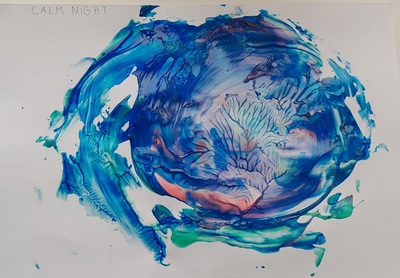
‘Calm night’ that started as an apple, if I remember correctly…

I am happy. As a teacher of English and a teacher of Art – I am happy. I have my Art Explorers classes twice a week, there are two groups so every lesson is not only taught twice and every idea trialled and trialled again. I am happy because I am getting better at coming up with ideas and with combining all the elements and finding the links between the artist, the language and the technique. And I can see how my kids are reacting to it and becoming more familiar with the paintings and more confident as artists.

I have also realised that all of us, we are more involved in the process and we are enjoying it more. The final product is important, of course, but so is the journey. It is all very rewarding and I am just happy that it is a part of my weekly schedule.

The art

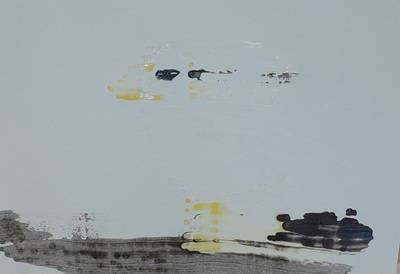
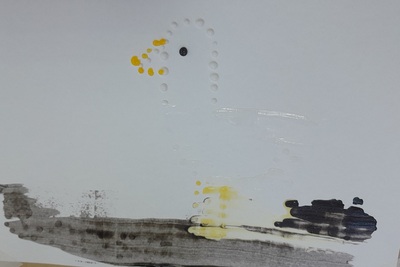
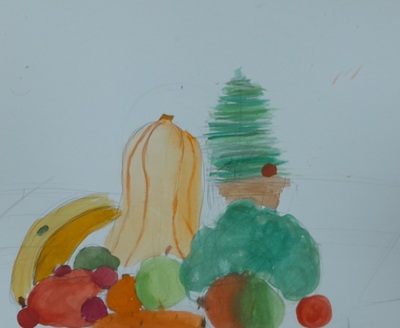
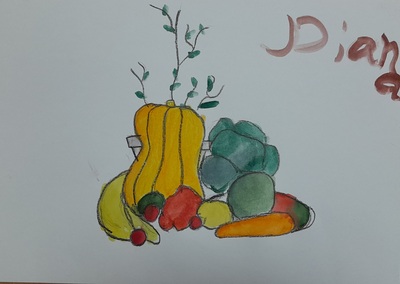
As usual, out of the three components, one had to be prioritised and, this time, it was the art itself. I wanted to give my students an opportunity to experience the process of creating a non-figurative art piece. We tried doing it a little bit in our Jackson Pollock lesson but there the lead was taken by the very specific technique. The outcomes, amazing as they are, were absolutely accidental, and only at the very end of the lesson, we gave our paintings their names.

This time, I wanted it to be fully conscious, purposeful and planned, from A to Z for the kids to understand how a figurative painting may become a non-figurative piece and the artist (aka US!) takes the responsibility for that.

In order to achieve it we did the following:

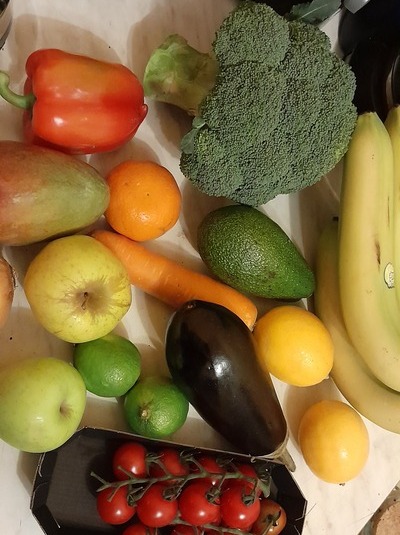
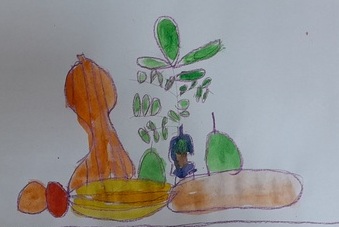
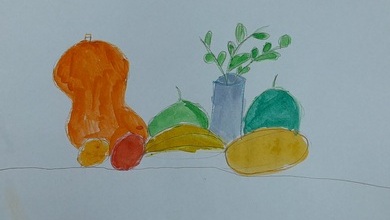
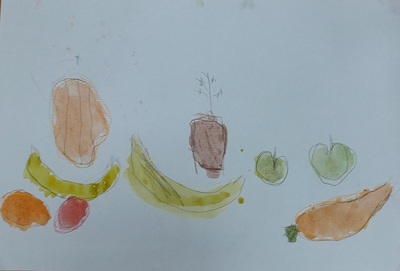
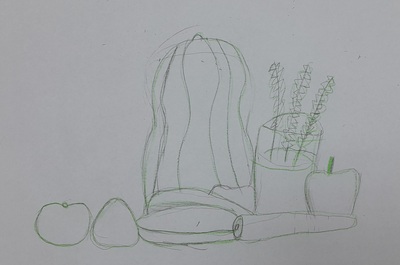
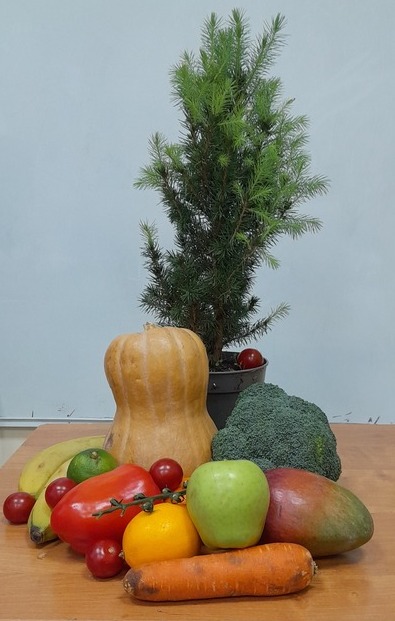
  • we decided what to paint. I suggested a fruit and veg still life since it was still our Fruit February but I allowed the kids to opt out of it if they really wanted to. Some did.
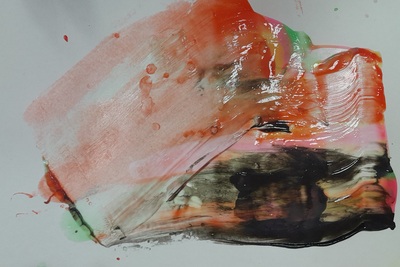
  • we made decisions about the composition and started to drip draw with the paints. I had a set of paints that I bought for the stained glass lessons but they turned out to be of a very bad quality, too watery, to liquidy and I could not use them for stained glass. They spent about five months in the drawer and last week I had already taken them out to bin them when the hoarder in me hesitated and decided to use them somehow. Since they were so good at dripping, dripping was what I chose to be their destiny. We used a technique we experimented with before, spread painting.
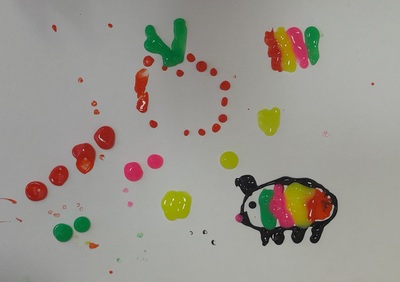
  • we drew the contours with drips of the paint (sharing the one set of paints, hooray to the social skills development!)
  • we photographed the ready picture
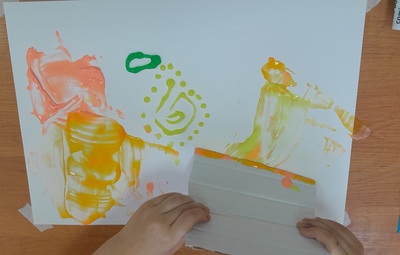
  • we used pieces of thick cardboard to spread the paint and a decision had to be made here to, regarding the movement (or movements) of the hand.
  • we gave the paintings a name. In most cases, it was a list of the items of the picture but some of the children came up with different names, not related to what the painting first was. Real artists, I am telling you!

As usual, the creation started with a quick modelling session during which I produced a painting of a watermelon and then turned it into a non-figurative item.

The artist

This was one of the lessons in which we did not have one superhero but a whole dinner party. I divided them into two groups to illustrate what figurative and non-figurative art is. Our definitions were very simply, in order to convey the message even to my youngest students. ‘Figurative’ was defined as ‘I can see real things’ and represented by a still-life by Cezanne, by Rene Magritte’s Son of Man, by an apply by Yayoi Kusama and a still-life by Ilya Mashkov. ‘Non-figurative’ was defined as ‘I can see shapes and colours’ and represented by a piece by Jackson Pollock, Kandinsky’s circles, Mark Rothko and Yves Klein that I have just discovered for myself.

I also brought two pictures that I created at home and I asked the students to guess what fruit I tried to paint by the colours that they could see or the shapes that were still visible, just to highlight the fact that the fruit might be only represented by a fruit, not necessarily by shape.

The language

The langauge in this lesson was, as in every lesson of this month – fruit and vegetables. Apart from that I wanted to play with the language and to reinforce the idea of looking at the world from a different perspective. In order to do that, we looked at a set of pictures of the everyday objects and fruit and vegetables, seen either under a microscope or in a close up. This was a lot of fun and I am definitely going to use this resource again!

Outcomes

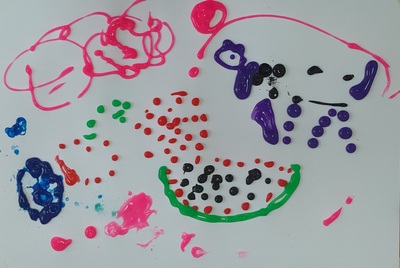
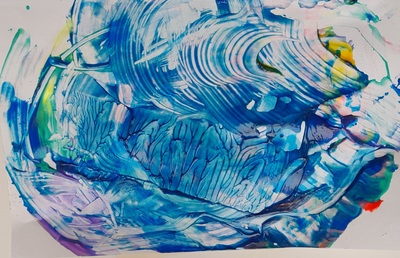
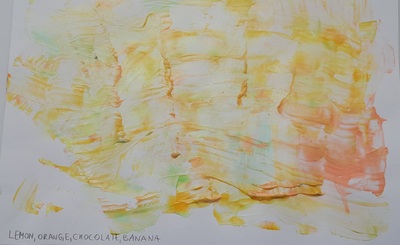
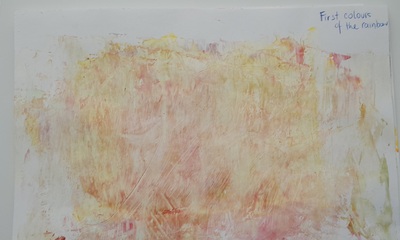
It’s not going to be the first time I say it, here or in the real life, but this, indeed, was one of my favourite Art lessons ever. The rest you can see in the paintings my students created.

‘First colours of the rainbow’

Happy Birthday, Funky Socks and Dragons!

Four years ago today, it was a Monday but I woke up early but lazy because I had requested a day off. I switched on the computer and checked and double and triple checked that I had actually submitted my MA dissertation (2nd March was the deadline) and then I went back to bed, to watch the Reservoir Dogs with coffee and chocolate. That was my idea of signalling to my brain that, after two years and a half of a long academic marathon that my MA studies combined with a full-time job were, I can finally take a break and breathe.

I was considering to turn this day into a laziness bonanza but by 3 p.m. I was already an owner of a domain and a blog and shortly after I published my first post. And I haven’t stopped since.

It has been 4 years, 267 posts, 1 author, 22,985 visitors and 30,500 visits and pretty much every country of the planet, including the US, Russia, Nigeria, Canda, South Africa, Uzbekistan, Malaysia, Australia, Sri Lanka, Estonia, the UK, India, Spain, Latvia, Slovakia, Japan, Singapore, Kyrgystan, Sweden, Egypt, Phillipines, the Netherlands, France, Ireland and Greece. Within the last 48 yours. This kind of a list always brings a huge smile on my face.

Every year, when I am approaching this anniversary, I make myself sit down and reflect on the blogging year that has just finished and answer the same question: ‘Do you want to go on for another year?’ I do, I still do.

I love writing, I am happy that I can share my ideas and that there are people who find them useful. Maybe I am making a ripple, a tiny, little one.

Thank you, dear readers, for still being here, for clicking and for being an incentive to write.

Teaching Out of the Box. Teaching English through Art

Natalia Goncharova-inspired peacock

This article was published in the Modern English Teacher in the March / April issue of 2023 and it is one of my favourite pieces ever committed which summarises my (almost) two years in the classroom as a teacher of English and Art. I have included there all the main considerations and as many as ten different ideas for the classroom. (Although it has taken me a whole year to add it to the blog (rolling the eyes).

I am very proud of it and if you are not a MET member and have no access to the article, I can only recommend all the other lesson ideas that I have shared here, on the blog. You can find them here.

Ilya Mashkov and our first still-life. Teaching English through Art

Still life ingredients

The language

February is our month of food and fruit and this is what we focus on in the language part of the lesson. With my younger group we listened to a great song from the Singing Walrus and we used cards to guess the fruit and vegetables from the stencils. We did some drilling, too and we talked about whether we like them or not.

The older students needed a more advanced activity and for that I used my magic bag which, indeed, on the day was full of fruit and veg that I brought for the still-life installation. Kids put their hands into the bag and tried to describe the object they were holding using basic adjectives (big / small, hard / soft, smooth / rough, light / heavy). Despite the fact that some of the kids were as old as ten, they all did enjoy it. We also talked about the fruit and vegetables we like and don’t like.

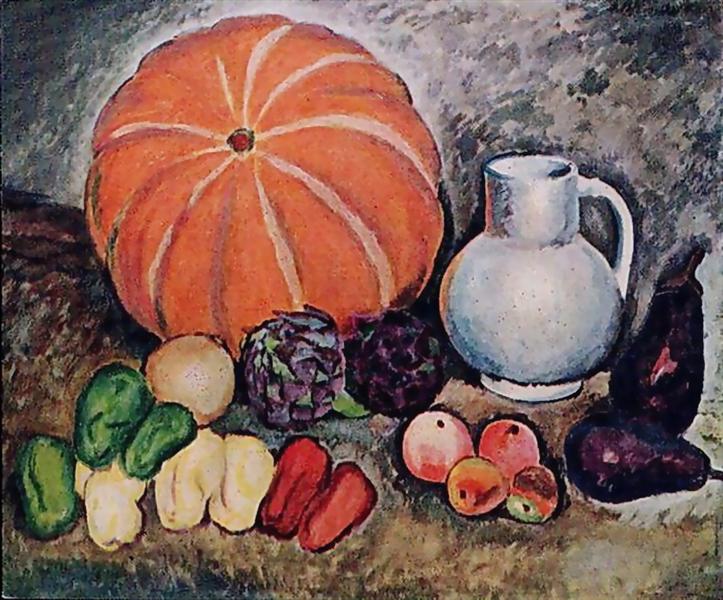
Ilya Mashkov, Pumpkin (1914)

The artist

Our artist of the day was my still-life here, Ilya Mashkov. I have used his painting in my Art classes before and it was only natural that this time I would want to take it up to another level. I did and I am quite happy how it went.

First of all, we introduced the artist himself and his famous (in my opinion) painting ‘Pumpkin’. We defined what a still life is (‘a painting of things’) and we looked at a few chosen paintings by Mashkov. I put together a set of questions, inspired and adapted from the material online Essential Questions to ask about each still life photographs. My final, go-to set for this topic includes: What colour is it? What objects can you see? What shapes can you see? What is the biggest shape? What is the smallest shape? Is it light? Is it dark? Is it smooth? Is it light?, although in the lessons this week we have gone through only a few of them.

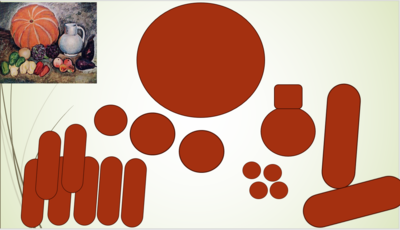
In order to prepare for our creative activity I prepared a special slide for ‘Pumpkin’ made entirely of shapes, one to represent every fruit and every vegetable. I was revealing them one by one and the task for the kids was to call out the object that they represent. In the end, I showed them the real painting and we checked our answers. I was a fun activity and it helped them the kids the basics of the composition of the painting and to prepare them for drawing.

The art

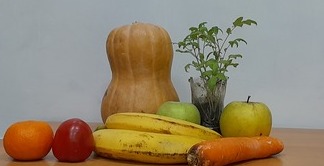
We started with putting together our installations and while I was the one responsible for arranging the items for the younger kids, my older group just took over the bag, the table and all the elements. And, it has to be said, not all the fruit made it to the table. Avocado and aubergine were not deemed worthy of our set. I accepted.

We outline the main stages of the lesson: 1. sketching with a pencil, 2. tracing the lines with crayons (one colour or a set of colours) and 3. colouring in with watercolours. I also showed my students the homework that I did before the lesson: a small still-life I painted at home and a photo of it, for comparison.

Since it was our first lesson with a still-life I did not want to invade too much and to direct the kids for example by guiding them in which order to draw the fruit. I wanted to let them try to face the task on their own and, also, to see what they can do. I was preparing my own copy and moving around, handing in the resources for each step (which also help with staging) and admiring what I was looking at. The only thing that I said to encourage them was something along the lines of ‘Don’t be scared, trust your hand. This is our first still-life. Let’s see how it goes’.

And guess what? It was beyond amazing. Some of my students are already very confident as regards drawing and they have a good eye for detail so I expected some good work but still they managed to surprise me, especially the little ones. They approached the task with curiosity, without fear and they were just working diligently on their paintings.

The only question left to answer is: What are we painting next?

Apples and an average Art lesson that sent me directly cloud number 9.

The apples? The apples!

‘What sometimes happens is that an artist, a real and creative person, gets what we call ‘a comission’: someone orders a special piece to be created and the artist agrees although, maybe, they did not really have that in mind. That is exactly what we are going to do today.’

This is how the lesson started. I delivered this little speech and my students were looking at me, puzzled. Apples (thanks to Isaac Newton) are some kind of a symbol of my school and I was asked to prepare some school decorations apple-related. To be perfectly honest, that had nothing to do with anything that I had in mind for February but since that was comissioned I decided to accept the challenge, to look for something and to change the idea for the month to food in art, moving ‘flowers’ to March. Which, actually, might not be such a bad idea altogether, for when we are a bit closer to the real spring. Fine.

Much to my surprise, it turned out that apples are very much present in Art and it is possible to find enough pieces from different centuries, including such gems as Magritte, Cezanne or Raphael and more contemporary pieces from Kusama or the random literal apple carvings. Apple is a symbol and it is a brand, too and we had fun looking at them and talking about them, both with my younger and older group.

The craft

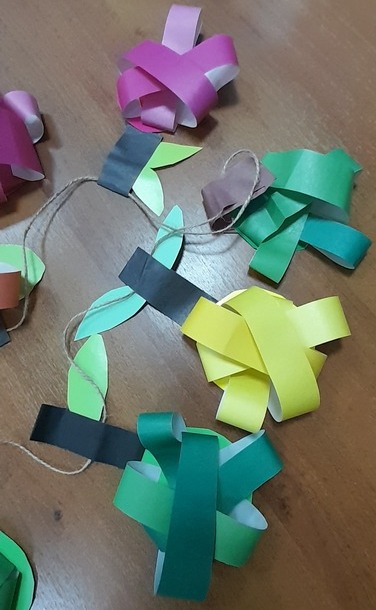
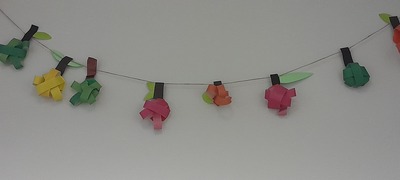
What was comissioned was some kind of a set of apples to put around the school, made of clay or paper mache or plasticine, but I have given myself a permission to interpret it my way, to create a 2D apple garland inspired by these two finds here and here. We used cardboard for the basis and coloured paper for the front and glue, scissors and crayons. The craft is easy and the base of the apple can be a square or a circle, even if it is not very expertly cut out by the students. The little strips can be glued in a few different ways and they are little hands-friendly, too. Kids can use the strips of one colour or they mix them and everyone can make as many as possible, maybe only one, maybe a few, giving us an even longer garland. And, unlike in the case of the Pollock’s lessons, there is a lot less preparation and cleaning. The teacher is relieved to be taking this kind of a time out.

The lesson went smoothly and now we have two garlands hanging over the arches in the main hall of the school, for everyone to admire. It is an easy task and if you need apples or oranges or any other fruit – here is an idea for you.

The lesson was ‘meh’ but I loved it

It was just an OK lesson. ‘Meh’, I’d say if you asked me if I liked it. I’d shrug my shoulders.

Yes, we prepared the garlands, more or less according to the creative brief, we now have something to put up on the wall and, really, it is a pretty garland, it looks good, especially with the multi-colour apples. My kids worked well, everyone made 4 or 5 apples, getting better as they went along and some students even chose to make one for themselves to take home (always a good sign!).

But we were not impressed. I was not and nor were my students. It really did feel like working on a commission that you just cannot say no to. Everyone was involved but the Muses did not enter the room last week. No one was inspired, no one got excited about their task, no one was calling ‘Miss Anka, miss Anka! Look! What do you think?’ from all corners of the classroom…’Meh’.

And yet I loved it. Even though my kids went ‘Meh’, both the younger ones and the older ones.

Why?

This lesson was a fantastic piece of evidence to prove how much we have developed and how much progress we have made since September. Whatever we were five months ago, we are not that anymore. We are artists now.

We have had a chance to work with a variety of techniques (spatter, print, ironed crayons, watercolours, stained glass paints, acrylic paints, guache, markers, crayons, collage, books and surprises) and we have imagined being in the Shoes of the Great (Warhol, Goncharova, Kandinsky, Picasso, Kusama, van Gogh, Malevich, Levitan and Pollock). Could a simple paper apple be of any challenge or interest to us? Debatable.

There was no challenge in the technique itself (because it was easy), there was no suprise of creation (because it is an apple) and there was no inspiration from the Artist of the Day (because there were too many and because we could not really interact with them).

My kids politely did what I asked them to do but there was no spark. They are already much older and more advanced. They need something else now. The teacher has had an OK lesson but the teacher is OVER THE MOON!

Crumbs #76 Magic Bag!

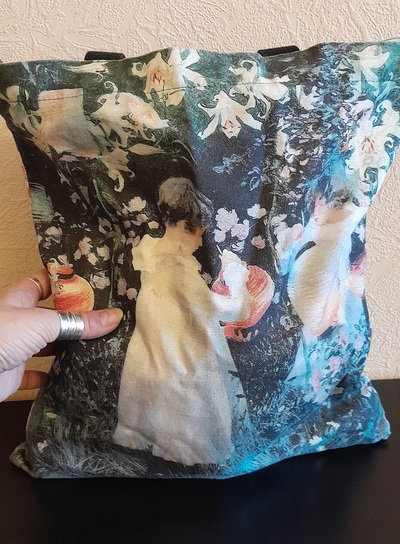
This year’s Magic Bag, Sargent-themed, courtesy of the Tate Gallery in London

Ingredients

  • a pretty bag, ideally cotton, or something that is not transparent. I am joking, of course, that it needs to be pretty, it doesn’t but it is true that it is better if it is appealing visually. I normally use one of my tote bags.
  • a set of interesting objects that are safe to touch that fit in.

Procedures

  • Students sit in a circle, on the chairs or on the carpet, with the teacher in the centre, at a small distance. The teacher revises the vocabulary in question.
  • I like to take out the bag and make a show of it – take it out of a cupboard or a box, show surprise, shake it perhaps if the content allows it, make a face and ask out loud ‘What’s in the bag?’ etc.
  • The teacher starts chanting, for example: ‘Anka’s got a secret, Anka’s got a secret!’ and this is a chant that we use for every student.
  • The teacher demonstrates how she puts the hand into a bag, finds one thing and tries to name it, for example: ‘It’s a lion‘ (topic: animals).
  • Afterwards, the object is taken out to check what it really is. The teacher asks ‘Is it a lion?’ and the kids answer. It can be also used as an opportunity for additional drilling of the key words.
  • The students take turns to play the game.
  • As a follow-up, the kids can do a simple listening activity and help clean up at the same time. The teachers says ‘Sasha, please put the lion in’ etc.

Why we like it?

  • The main reason is a very strong appeal of an activity that is involves motor skills, guessing, an element of mystery and fun. Kids love to put their hand it and try to recognise or to name the objects. It so happens that we use the same bag during the entire year so after the first time, the kids can recognise it and they look forward to it. This week I was walking in the school with my bag (that on that day was ‘just my bag’ and my kids walking past got excited and started to ask if this is what we would do in class on the day).
  • The other main reason is that this activity can be used with a wide range of objects and for a wide range of topics, from those more obvious ones such as school objects, toys or materials to some less obvious such as rooms in the house or comparatives. I have also used it for colours, in one of the first lessons of the course, although, of course, the children did not know many of the objects that we used and we focused only on sorting them out according to their colours.
  • There are plenty of variations of the activity and it can be repeated in a series of lessons. It has not happened yet, over all these years, that I would take out a bag and hear ‘Oh, no, not the Magic Bag again!’ from the audience.
  • As regards the chant, I like to use ‘Anka’s got a secret!’ or a simple question ‘Anka, what’s in the bag?’ which all the kids repeat and which is a great question to know.
  • As regards the procedures, the kids can simply take out one object or try to guess it in their L1, they can describe it with the adjectives that they have (for example pairs of adjectives such as big / small, heavy / light, smooth / rough, soft/ hard or the materials: it is made of plastic etc) for the class to guess. Recently, I have used it also to practise comparisons and every child had to take out two objects, to describe them and then to compare them when they were both out of the bag. If it is appropriate for the objects, the kids can also try to shake them in the bag to check what noise they make. Another option is of course the most tactile version of the game – kids touching the objects with both hands without taking the objects out, through the fabric.
  • The age range of the students can also vary. The youngest kids that I have used it with were 3 – 4 years old, the oldest were my teenagers and they also enjoyed it. The language that we expect the students to produce will depend on their level and age. When we played the game last week with my A1 primary year 1, they were able to produce a set of four sentences in one go because we used it in the final stages of the adjectives unit.
  • Naturally, the objects can be used to introduce the target langauge, to practise or to revise the language, verbally or in writing or even as an introduction to a listening or reading task.
  • As regards the less obvious topics for example verbs or rooms in the house, it is still possible if the objects are used as symbols. ‘A spoon’ can mean ‘to eat’ or ‘the kitchen’, a pair of socks (a new pair!) can symbolise ‘to wear’ or ‘the bedroom’, ‘a tub of toothpaste’ can stand for ‘to brush your teeth’ or ‘the bathroom’ and so on.
  • During the pandemic, I also used the Magic Bag in class, although in the online version the bag was much thinner and I was putting one object at a time and demonstrating it to the camera. I also used to make noises with them, without showing them to the camera i.e. dropping them on the table, squeezing them, tapping on them etc or, as the last hint, showing only a tiny little corner of the object to the camera. It also worked very well! And, in the online world, it was also possible for my students to take part and do the same with things that they had at home.
  • Last but not least, this is a unique opportunity for the teacher to take the most random selection of things to school such as pasta pieces in a bag, a soap, a salt shaker, a spoon, a pair of socks, a tube of toothpaste, seeds in a bag, some flour in a bag, shells, stones, tomatoes, cucumbers, soft toys, an electric torch, a small jar, a pair of earrings, a ribbon, cones…